For English-speaking travelers
Know what you're ordering in China.
Read Chinese menus, understand unfamiliar dish names, and find the words to order your meal.
Eat China with Confidence brings together 250+ dishes, ingredients, and ordering phrases in English, Simplified Chinese, and pinyin.
View Kindle edition on AmazonView paperback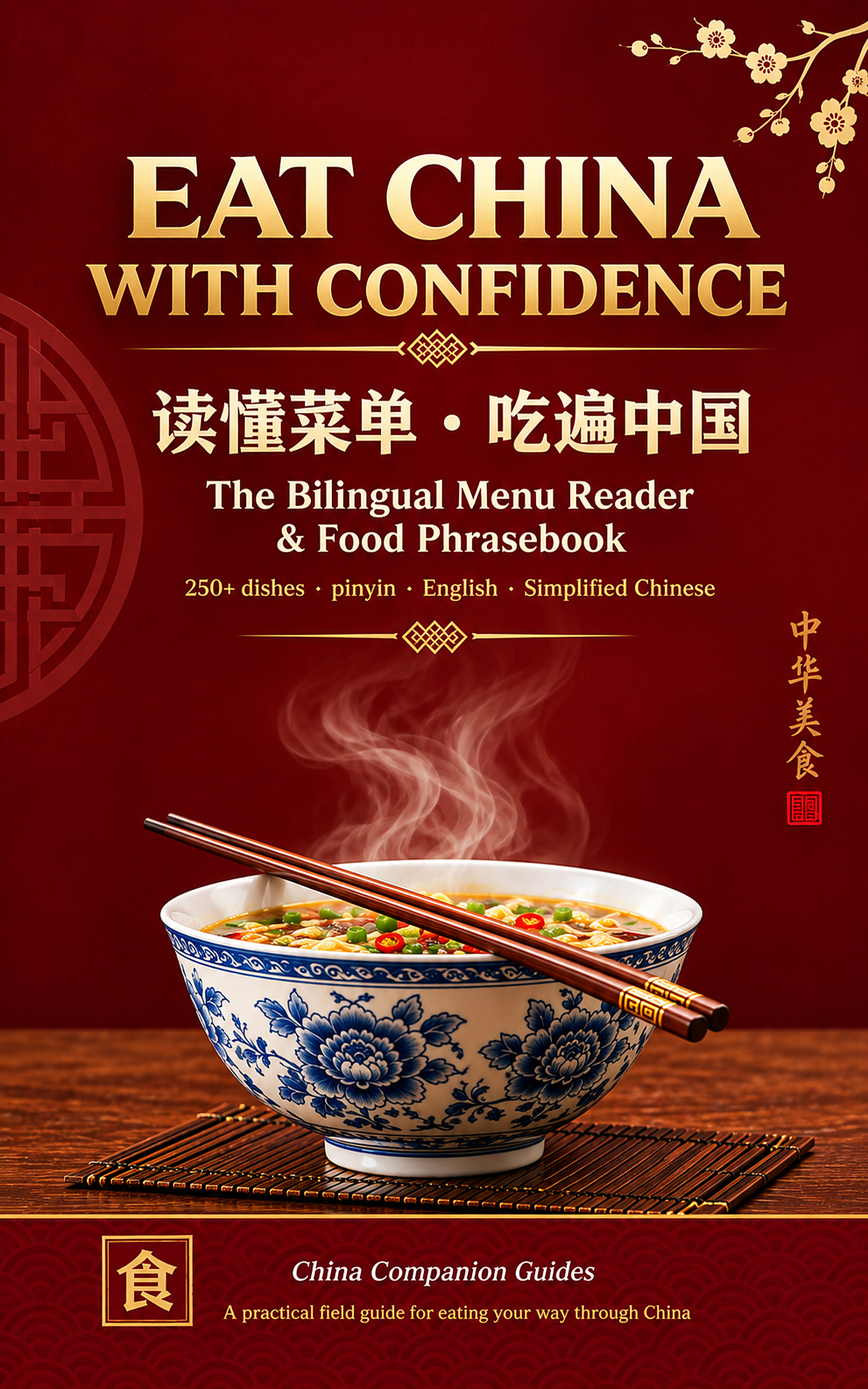
How to read a Chinese menu
Start with how the food is cooked.
Recognizing a few characters gives you clues before you translate the whole dish. These common cooking words are a useful starting point.
| Chinese | Pinyin | Meaning |
|---|---|---|
| 炒 | chǎo | Stir-fried |
| 蒸 | zhēng | Steamed |
| 炸 | zhá | Deep-fried |
| 烤 | kǎo | Roasted or grilled |
Chinese food names explained
A literal translation can miss the point.
鱼香茄子 · yúxiāng qiézi
“Fish-fragrant eggplant” refers to a seasoning style. The name alone does not tell you everything about the ingredients: some versions include minced pork. Ask the restaurant rather than assuming an eggplant dish is vegetarian.
Ordering food without speaking Mandarin
Show the phrase. Start the conversation.
One useful phrase for vegetarian travelers is 我吃素。 (Wǒ chī sù.) — “I'm vegetarian.” This starts the conversation; explain exactly what you avoid and ask about sauces, stock and preparation.
Recipes and preparation vary. A phrasebook cannot guarantee that a dish is suitable for an allergy or dietary requirement. Confirm with the kitchen.
Inside the guide
A reference for the meal in front of you.
Decode the menu
Dish explanations, ingredients, cooking methods and regional food guides.
Find an ordering phrase
Scripts for restaurants, hotpot, street stalls and takeout, with Chinese and pinyin.
Ask about your meal
Language for spice preferences, dietary needs and checking ingredients.
Kindle ASIN: B0HJH17W5X · Paperback ISBN: 9798161110591
Title: Eat China with Confidence · Author: China Companion Guides